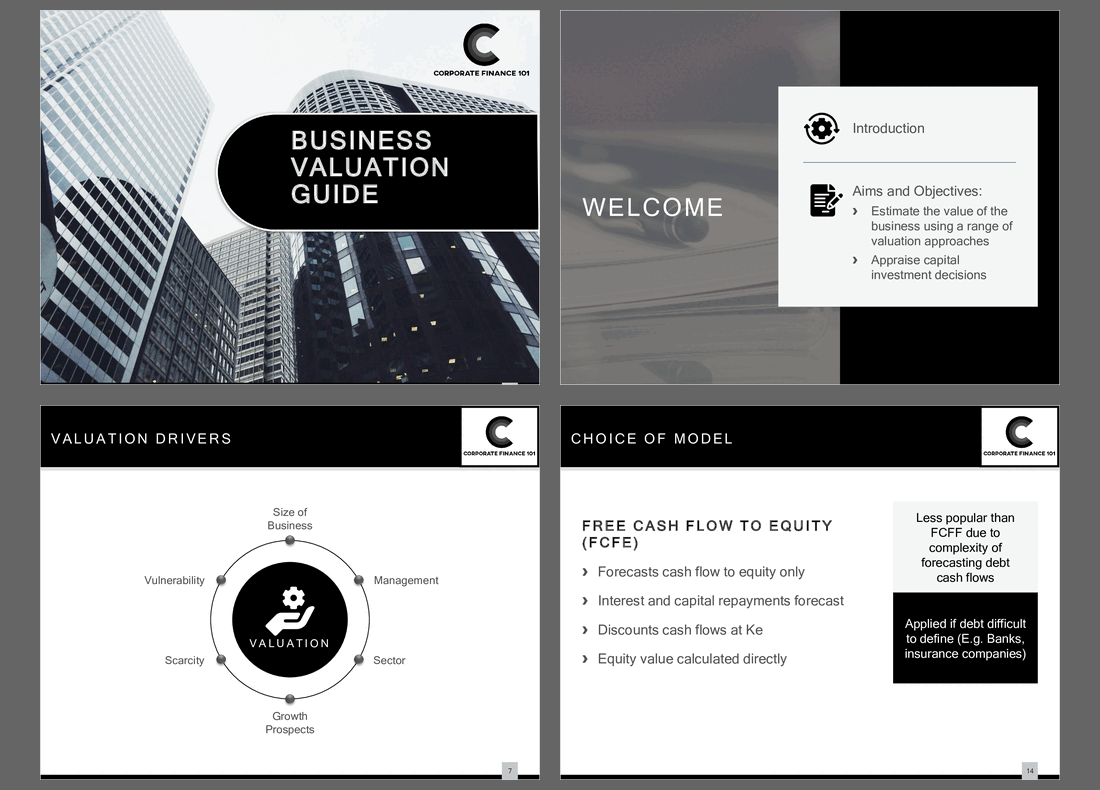
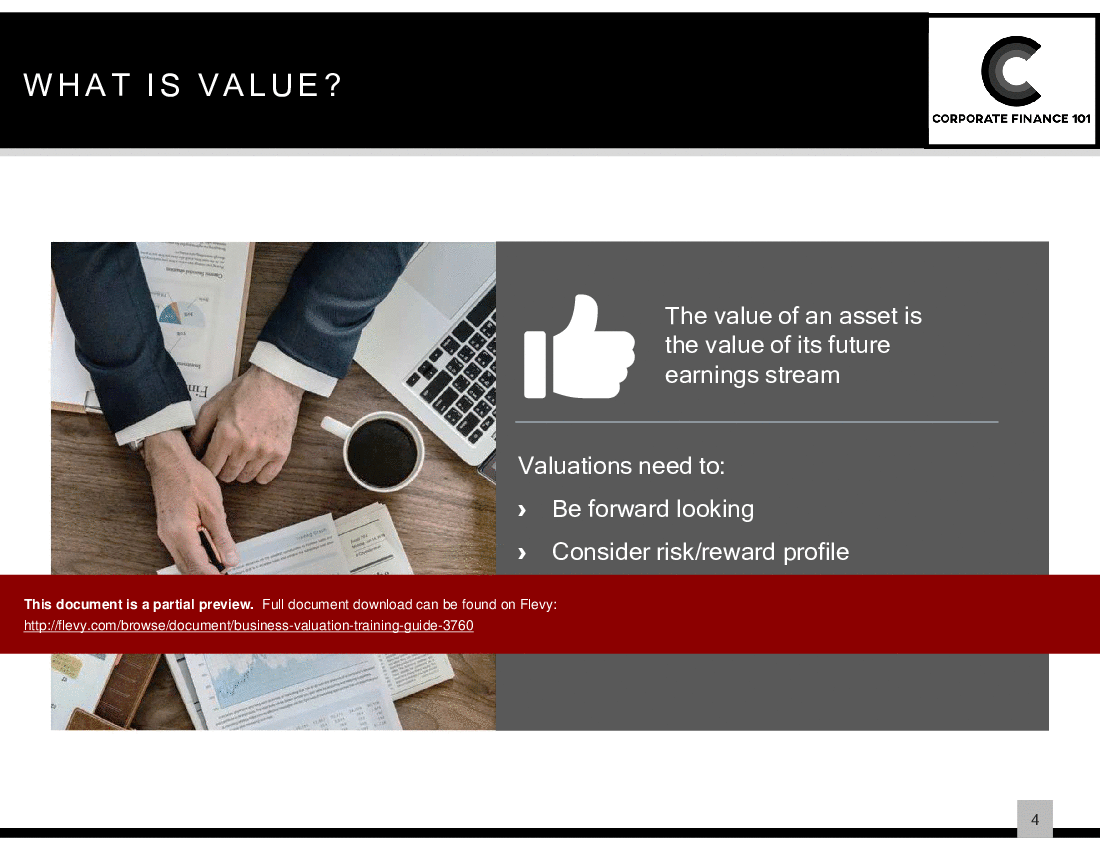

Business Valuation Training Guide   62-slide PPT PowerPoint presentation slide deck (PPTX)
$29.00

Business Valuation Training Guide (62-slide PPT PowerPoint presentation slide deck (PPTX)) Preview Image
Log in to unlock full preview.
Business Valuation Training Guide (62-slide PPT PowerPoint presentation slide deck (PPTX)) Preview Image
Arrow   Click main image to view in full screen.

Business Valuation Training Guide (PowerPoint PPTX Slide Deck)

PowerPoint (PPTX) + Word (DOCX) 62 Slides

Top 500 Best Practice $29.00

Add to Cart


Immediate download
Fully editable PowerPoint
Free lifetime updates

BENEFITS OF THIS POWERPOINT DOCUMENT

  1. Provides an introduction to the major business valuation concepts

M&A PPT DESCRIPTION

Editor Summary The Business Valuation Training Guide is a 62-slide PowerPoint (PPTX) with a supplemental DOCX authored by Corporate Finance 101 that explains valuation methodologies and drivers. Read more

A business valuation is a formal process to estimate the value of a business. Business valuation is one part art and one part science. It relies on the professional judgment of an analyst who assesses the nature of the business, its financial performance, local and national economic conditions, values of assets and related liabilities, capital structure composition plus any unique know-how or proprietary technology to arrive at an estimate of the value of the business.

A company needs to be valued if it is being bought, sold, or liquidated. Sometimes a company must provide a value of its assets or company as a whole to raise debt also. A valuation professional typically looks at the discounted cash flow (DCF), market valuation multiples, and comparable transactions.

Because every business is unique, there are no rule of thumb methods that will result in a reliable and defensible value. While a company valuation is an uncertain science, it is essential that a robust valuation is conducted that enables you or a client, the ability to negotiate effectively with your potential buyers for example.

This is a useful guide for M&A practitioners, CEOs, CFOs, venture capitalists, transaction advisory consultants and private equity fund managers which provides an overview of the major valuation concepts and issues. The following topics are covered:

•  Valuation methods: DCF and market multiples approach
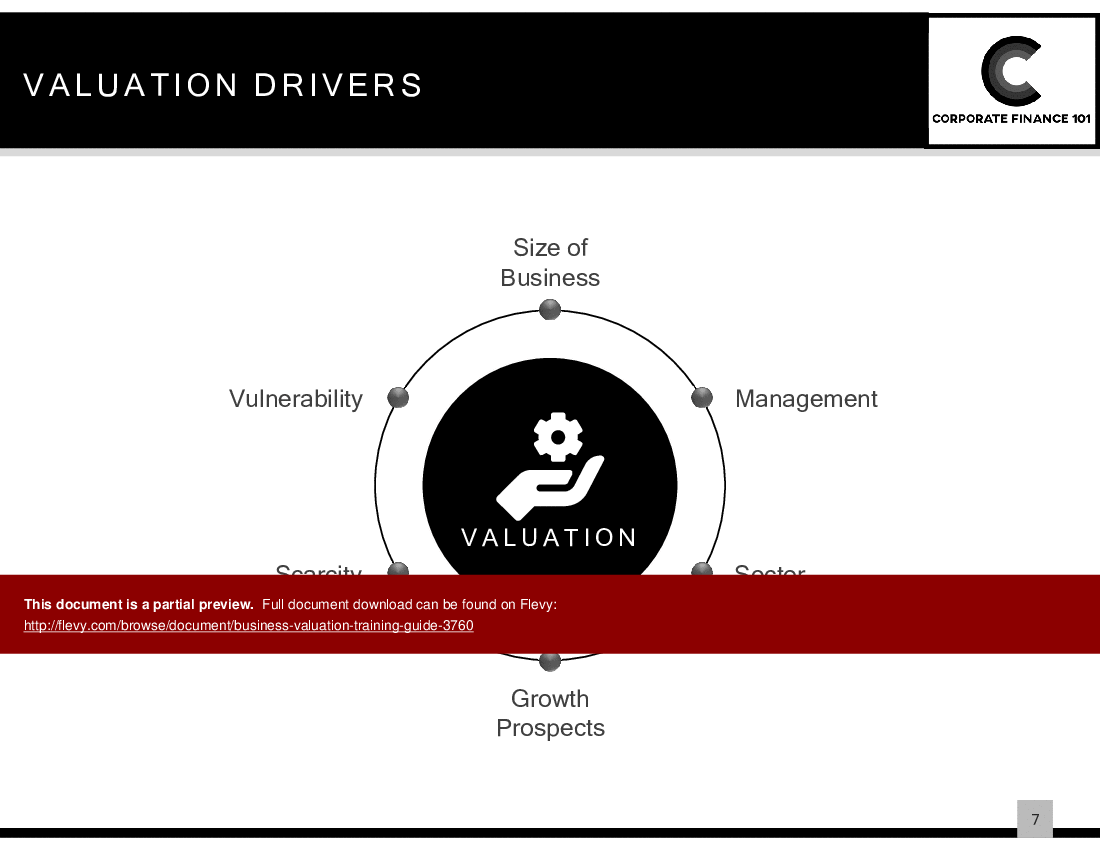
•  Valuation drivers
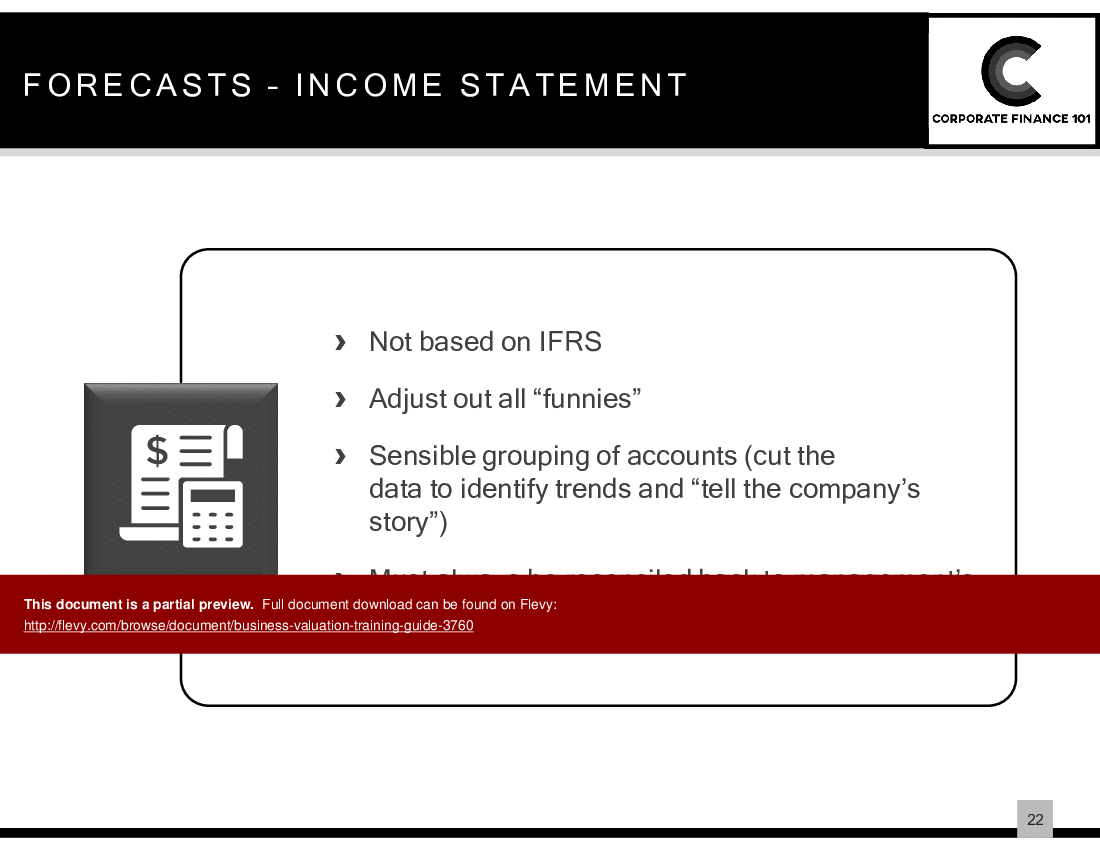
•  Forecasts
•  Discount rate
•  Calculating value

This guide together with the Integrated Valuation and Forecast Financial Statement Model, will enable you to perform a business valuation.

This guide emphasizes the importance of considering both non-operating assets and the cost of debt in valuations. It also highlights common mistakes such as unrealistic growth assumptions and the omission of liquidity discounts.

Got a question about the product? Email us at support@flevy.com or ask the author directly by using the "Ask the Author a Question" form. If you cannot view the preview above this document description, go here to view the large preview instead.

MARCUS OVERVIEW

This synopsis was written by Marcus [?] based on the analysis of the full 62-slide presentation.


Executive Summary
The Business Valuation Training Guide is an essential resource for professionals seeking to master the intricacies of business valuation. This guide covers various valuation methodologies, including Discounted Cash Flow (DCF) and market multiples, equipping users with the knowledge to estimate business value accurately. It emphasizes the importance of understanding key valuation drivers and provides insights into capital investment decisions, making it invaluable for executives and consultants involved in mergers, acquisitions, and financial reporting.

Who This Is For and When to Use
•  Corporate executives involved in strategic planning and investment decisions
•  Financial analysts tasked with business valuation and financial modeling
•  Consultants specializing in mergers and acquisitions
•  Investment professionals assessing potential investment opportunities
•  Business owners seeking to understand their company's market value

Best-fit moments to use this deck:
•  During mergers and acquisitions to assess fair value
•  When preparing for investment pitches or financial reporting
•  In training sessions for finance teams on valuation techniques
•  For strategic planning discussions regarding business growth and investment

Learning Objectives
•  Define key valuation concepts and methodologies used in business valuation
•  Estimate business value using the Discounted Cash Flow (DCF) method
•  Apply market multiples to assess company value in comparison to peers
•  Identify and analyze key valuation drivers that affect business worth
•  Evaluate capital investment decisions based on valuation outcomes
•  Understand the implications of valuation in mergers and acquisitions

Table of Contents
•  Introduction (page 3)
•  Uses of Valuations (page 5)
•  Valuation Methods (page 6)
•  Valuation Drivers (page 7)
•  DCF Approach (page 8)
•  Key Assumptions (page 9)
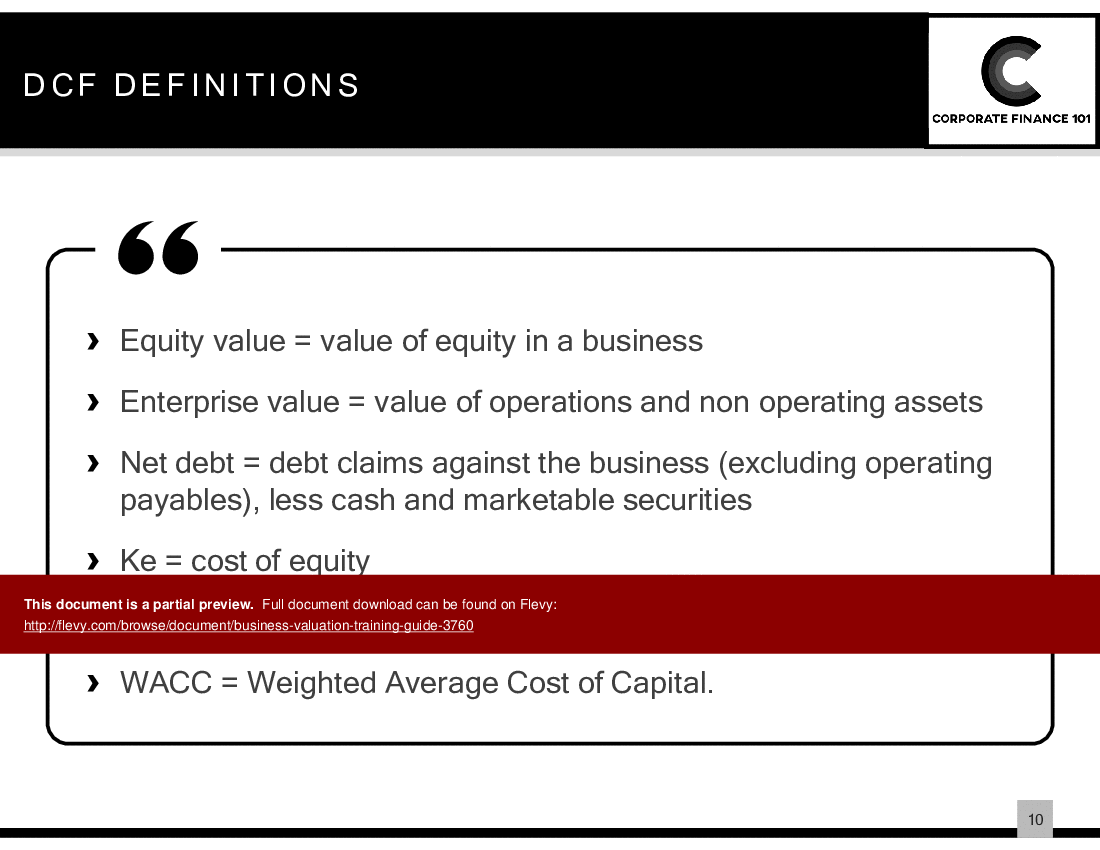
•  DCF Definitions (page 10)
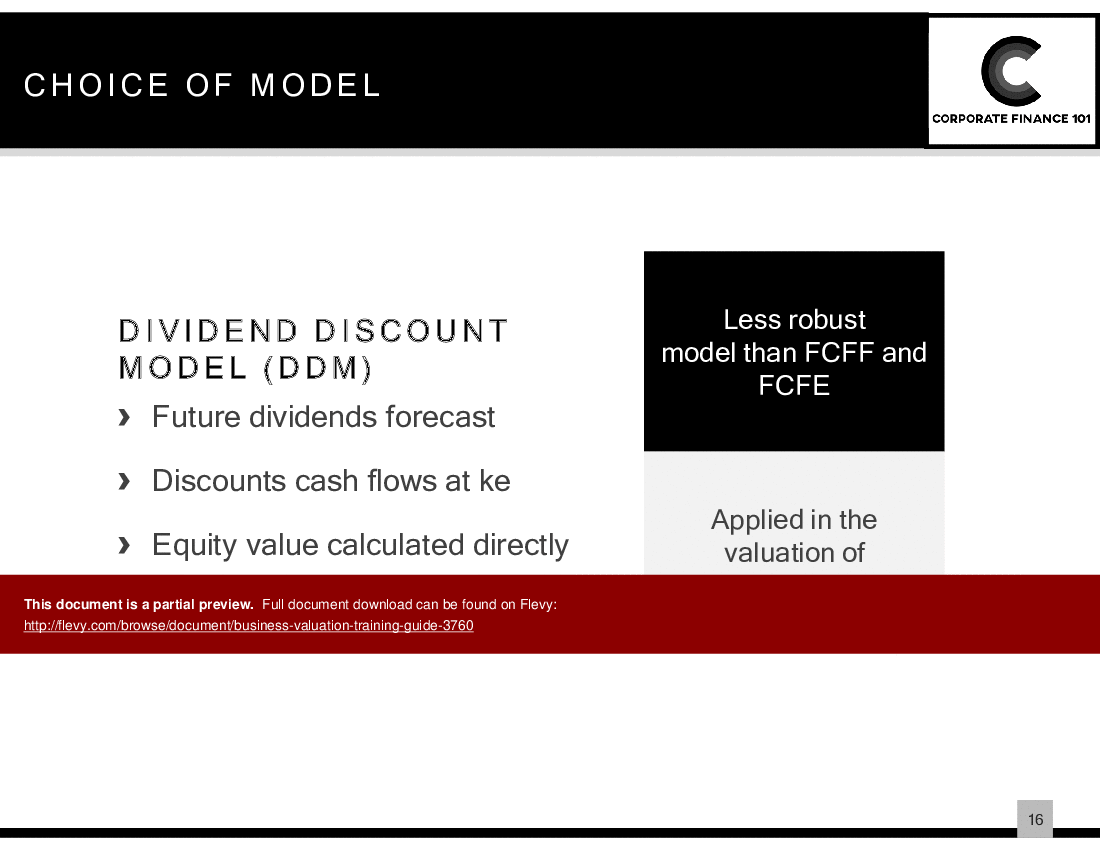
•  Choice of Model (page 11)
•  Common Mistakes (page 17)
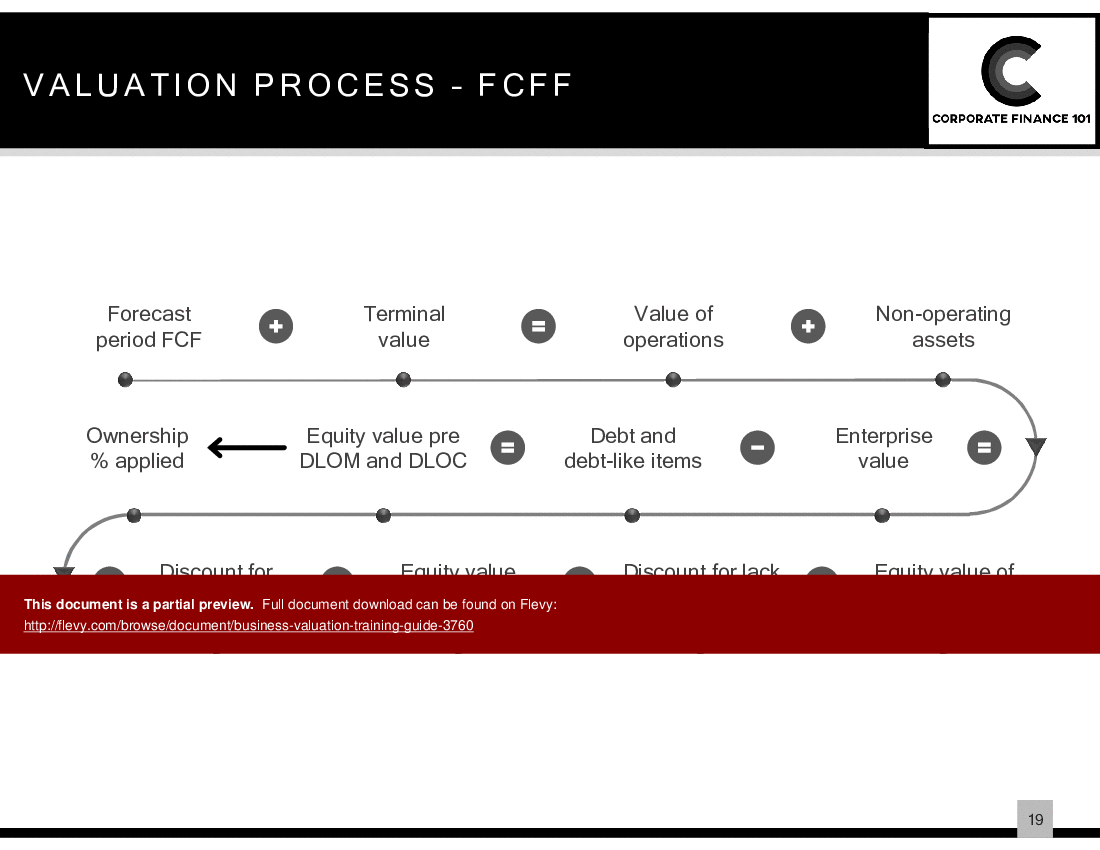
•  Valuation Process - FCFF (page 19)
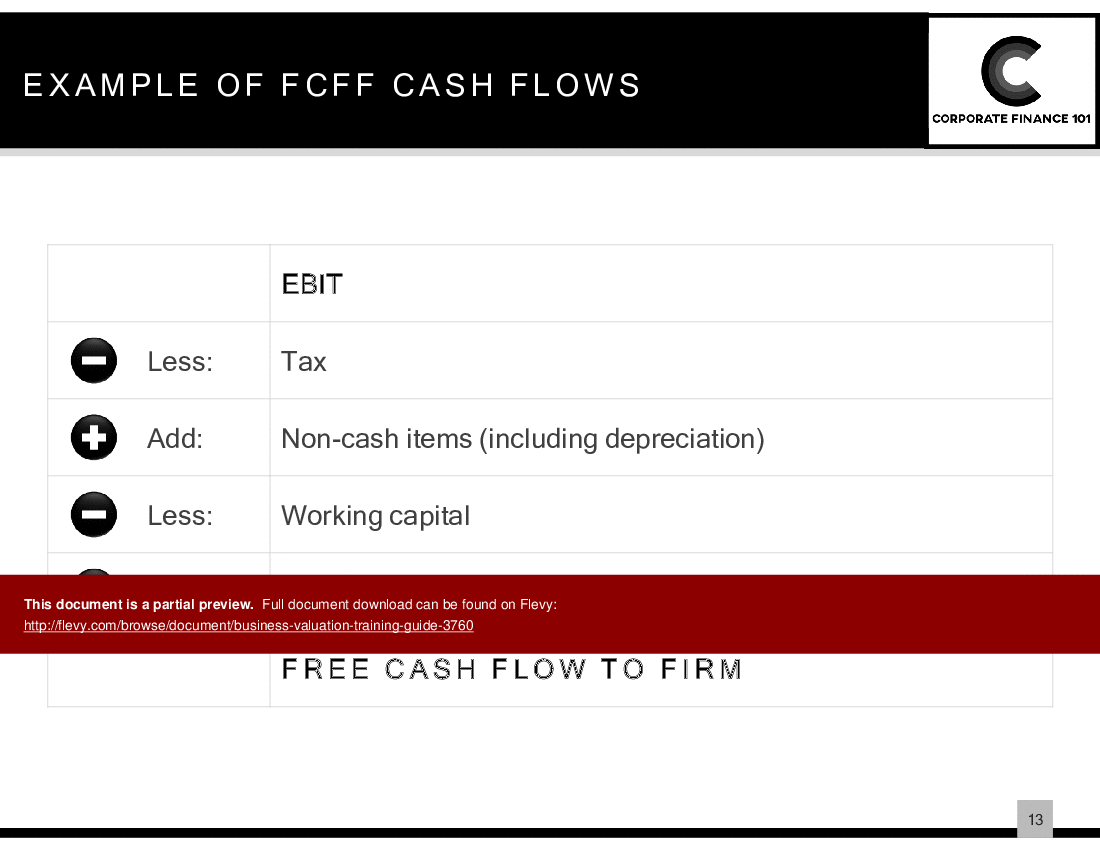
•  Non-operating Assets (page 49)
•  Market Multiples Approach (page 56)
•  Conclusion (page 61)
•  Summary (page 62)

Primary Topics Covered
•  Valuation Methods - The guide outlines key valuation methodologies, including DCF and market multiples, providing a framework for estimating business value.
•  Valuation Drivers - Key factors influencing business value, such as size, management quality, and growth prospects, are discussed in detail.
•  Discounted Cash Flow (DCF) - A comprehensive explanation of the DCF approach, including cash flow forecasting and terminal value calculation, is provided.
•  Common Mistakes - The guide highlights frequent pitfalls in valuation practices to help users avoid common errors.
•  Market Multiples - Insights into using market multiples for valuation, including types of multiples and their applications, are included.
•  Non-operating Assets - Guidance on evaluating non-operating assets and their impact on enterprise value is discussed.

Deliverables, Templates, and Tools
•  DCF valuation model template for estimating business value
•  Market multiples analysis framework for comparative valuation
•  Checklist for identifying key valuation drivers
•  Guide for assessing non-operating assets in valuation
•  Common mistakes reference sheet for valuation practices
•  Valuation summary table for quick reference during assessments

Slide Highlights
•  Overview of valuation methods, emphasizing DCF and market multiples
•  Detailed explanation of DCF assumptions and calculations
•  Visual representation of valuation drivers impacting business value
•  Common mistakes slide to enhance awareness and accuracy in valuation
•  Summary table for quick reference on valuation processes and outcomes

Potential Workshop Agenda
Introduction to Business Valuation (30 minutes)
•  Overview of valuation importance in business
•  Discussion of key valuation concepts and terminology

DCF Valuation Methodology (60 minutes)
•  Step-by-step guide to DCF valuation
•  Practical exercises on cash flow forecasting and terminal value calculation

Market Multiples and Valuation Drivers (45 minutes)
•  Analysis of market multiples and their applications
•  Identification of key valuation drivers in different business contexts

Common Mistakes and Best Practices (30 minutes)
•  Review of common pitfalls in valuation
•  Strategies for improving accuracy and reliability in valuation practices

Customization Guidance
•  Tailor the DCF model inputs to reflect specific industry metrics and growth rates
•  Adjust market multiples based on comparable company analysis relevant to the target business
•  Incorporate company-specific risks and opportunities into the valuation process
•  Update the glossary to include terminology specific to the buyer's industry or market

Secondary Topics Covered
•  Historical performance analysis for valuation accuracy
•  Impact of economic conditions on business valuation
•  Regulatory considerations in business valuations
•  The role of market sentiment in valuation adjustments
•  Techniques for communicating valuation results to stakeholders

Topic FAQ

What are the main valuation methods and when should I use each?

The 2 primary methods are Discounted Cash Flow (DCF), used when reliable cash-flow forecasts and discount rates are available, and market multiples, used for comparative benchmarking against similar companies. The choice depends on data quality, purpose of the valuation, and company characteristics; common practice is to use both DCF and market multiples.

How do I build a DCF model and which assumptions matter most?

Building a DCF requires forecasting operating cash flows, selecting an appropriate discount rate (WACC or CAPM inputs like beta), and calculating terminal value. Accuracy depends on realistic growth rates, alignment of cash flows and discount rates, and explicit terminal value methods; the Business Valuation Training Guide covers cash flow forecasting and terminal value calculation.

What common valuation mistakes should I watch for?

Frequent errors include unrealistic growth assumptions, misaligned cash flows and discount rates, neglecting non-operating assets, and failing to apply liquidity or control discounts when appropriate. Avoiding these pitfalls improves defensibility; the guide’s common mistakes reference sheet highlights such issues.

How should non-operating assets and debt be treated in enterprise valuation?

Non-operating assets should be identified and valued separately, then added or subtracted to reconcile enterprise versus equity value; cost of debt must be reflected in the discount rate or capital structure. The Business Valuation Training Guide includes specific guidance on assessing non-operating assets and considering debt.

What should I look for in a valuation toolkit when my team has limited time?

Prioritize toolkits that provide a ready DCF template, market multiples framework, a checklist of valuation drivers, and a valuation summary table to speed analysis and review. These deliverables help small teams produce consistent outputs quickly, such as a DCF valuation model template.

How do I assess the cost versus value of buying valuation templates or training decks?

Evaluate whether the materials include practical templates (DCF model, multiples framework), diagnostics (common mistakes, driver checklists), and customization guidance for industry metrics. If they reduce repetitive build time and standardize outputs, they can be cost-effective; look for a DCF valuation model template as a key deliverable.

After a merger, how do I determine fair value and purchase price adjustments?

Use multiple methods—DCF and market multiples—to triangulate value, explicitly identify and value non-operating assets, and adjust for control and marketability discounts where relevant. Cross-checks and transparent assumptions help defend adjustments, including adjustments for non-operating assets and discounts.

What’s an effective way to present valuation results to executives or potential investors?

Present a clear valuation summary table that shows method-by-method results, key assumptions, sensitivity ranges, and identified valuation drivers. Transparency on assumptions and a concise summary aid decision-making; the guide provides a valuation summary table for quick executive reference.

Document FAQ
These are questions addressed within this presentation.

What valuation methods are covered in this guide?
The guide covers Discounted Cash Flow (DCF) and market multiples as primary valuation methods, along with their applications and implications.

How do I determine which valuation method to use?
The choice of valuation method depends on the specific context, including the type of business, available data, and the purpose of the valuation.

What are common mistakes to avoid in business valuation?
Common mistakes include unrealistic growth assumptions, misalignment of cash flows and discount rates, and overlooking non-operating assets.

How can I apply the DCF method effectively?
To apply the DCF method effectively, ensure accurate cash flow forecasts, select an appropriate discount rate, and calculate terminal value correctly.

What are valuation drivers?
Valuation drivers are key factors that influence a business's value, including size, management quality, market position, and growth prospects.

How do market multiples work in valuation?
Market multiples involve comparing a company's financial metrics to those of similar companies to derive a valuation based on industry benchmarks.

What is the importance of non-operating assets in valuation?
Non-operating assets can significantly impact enterprise value and should be accurately assessed and included in the valuation process.

How can I ensure my valuation is credible?
Utilize multiple valuation methods, cross-check results, and ensure transparency in assumptions and calculations to enhance credibility.

Glossary
•  DCF - Discounted Cash Flow; a valuation method based on future cash flows.
•  Market Multiples - Valuation method using ratios derived from comparable companies.
•  Valuation Drivers - Factors influencing a company's value.
•  Terminal Value - The estimated value of a business beyond the forecast period.
•  Non-operating Assets - Assets not essential to the core operations of a business.
•  Enterprise Value - Total value of a business, including debt and excluding non-operating assets.
•  Equity Value - Value of a business attributable to shareholders after deducting debt.
•  WACC - Weighted Average Cost of Capital; the average rate of return a company is expected to pay its security holders.
•  Beta - Measure of a stock's volatility in relation to the market.
•  CAPM - Capital Asset Pricing Model; used to determine the expected return on an asset.
•  Liquidity Discount - Reduction in value applied to illiquid assets.
•  Discount for Lack of Control (DLOC) - Reduction in value for minority interests.
•  Discount for Lack of Marketability (DLOM) - Reduction in value for assets that cannot be easily sold.
•  Comparable Companies - Firms with similar characteristics used for benchmarking.
•  Forecasting - Estimating future financial performance based on historical data.
•  Cash Flow - The net amount of cash being transferred into and out of a business.
•  EBITDA - Earnings Before Interest, Taxes, Depreciation, and Amortization; a measure of a company's overall financial performance.
•  Investment Property - Real estate held for investment purposes.
•  Tax Liabilities - Amounts owed to tax authorities.

Source: Best Practices in M&A, Valuation PowerPoint Slides: Business Valuation Training Guide PowerPoint (PPTX) Presentation Slide Deck, Corporate Finance 101


$29.00

Add to Cart
  

ABOUT THE AUTHOR

Additional documents from author: 37

Corporate Finance 101 consists of ex EY and Grant Thornton consultants who have experience helping professionals across disciplines, with a focus on strategy consulting and transaction advisory.

These documents are prepared to help you increase the impact of your business communication and save you valuable time.

The documents are based upon techniques learned while working at ... [read more]

Ask the Author a Question

You must be logged in to contact the author.

Click here to log in Click here register

Did you know?
The average daily rate of a McKinsey consultant is $6,625 (not including expenses). The average price of a Flevy document is $65.
Bundle and save! You can save up to % with bundles!

View bundle(s)


Trusted by over 10,000+ Client Organizations
Since 2012, we have provided business templates to over 10,000 businesses and organizations of all sizes, from startups and small businesses to the Fortune 100, in over 130 countries.
AT&T GE Cisco Intel IBM Coke Dell Toyota HP Nike Samsung Microsoft Astrazeneca JP Morgan KPMG Walgreens Walmart 3M Kaiser Oracle SAP Google E&Y Volvo Bosch Merck Fedex Shell Amgen Eli Lilly Roche AIG Abbott Amazon PwC T-Mobile Broadcom Bayer Pearson Titleist ConEd Pfizer NTT Data Schwab


Read Customer Testimonials

 
"I have used FlevyPro for several business applications. It is a great complement to working with expensive consultants. The quality and effectiveness of the tools are of the highest standards."

– Moritz Bernhoerster, Global Sourcing Director at Fortune 500
 
"The wide selection of frameworks is very useful to me as an independent consultant. In fact, it rivals what I had at my disposal at Big 4 Consulting firms in terms of efficacy and organization."

– Julia T., Consulting Firm Owner (Former Manager at Deloitte and Capgemini)
 
"I am extremely grateful for the proactiveness and eagerness to help and I would gladly recommend the Flevy team if you are looking for data and toolkits to help you work through business solutions."

– Trevor Booth, Partner, Fast Forward Consulting
 
"I like your product. I'm frequently designing PowerPoint presentations for my company and your product has given me so many great ideas on the use of charts, layouts, tools, and frameworks. I really think the templates are a valuable asset to the job."

– Roberto Fuentes Martinez, Senior Executive Director at Technology Transformation Advisory
 
"Last Sunday morning, I was diligently working on an important presentation for a client and found myself in need of additional content and suitable templates for various types of graphics. Flevy.com proved to be a treasure trove for both content and design at a reasonable price, considering the time I "

– M. E., Chief Commercial Officer, International Logistics Service Provider
 
"My FlevyPro subscription provides me with the most popular frameworks and decks in demand in today’s market. They not only augment my existing consulting and coaching offerings and delivery, but also keep me abreast of the latest trends, inspire new products and service offerings for my practice, and educate me "

– Bill Branson, Founder at Strategic Business Architects
 
"As a consulting firm, we had been creating subject matter training materials for our people and found the excellent materials on Flevy, which saved us 100's of hours of re-creating what already exists on the Flevy materials we purchased."

– Michael Evans, Managing Director at Newport LLC
 
"As a young consulting firm, requests for input from clients vary and it's sometimes impossible to provide expert solutions across a broad spectrum of requirements. That was before I discovered Flevy.com.

Through subscription to this invaluable site of a plethora of topics that are key and crucial to consulting, I "

– Nishi Singh, Strategist and MD at NSP Consultants


Save with Bundles

This document is available as part of the following discounted bundle(s):


Customers Also Bought These Documents


Customers Also Like These Documents

Explore Templates on Related Management Topics


Your Recently Viewed Documents
Download our FREE Strategy & Transformation Framework Templates

Download our free compilation of 50+ Strategy & Transformation slides and templates. Frameworks include McKinsey 7-S, Balanced Scorecard, Disruptive Innovation, BCG Curve, and many more.










